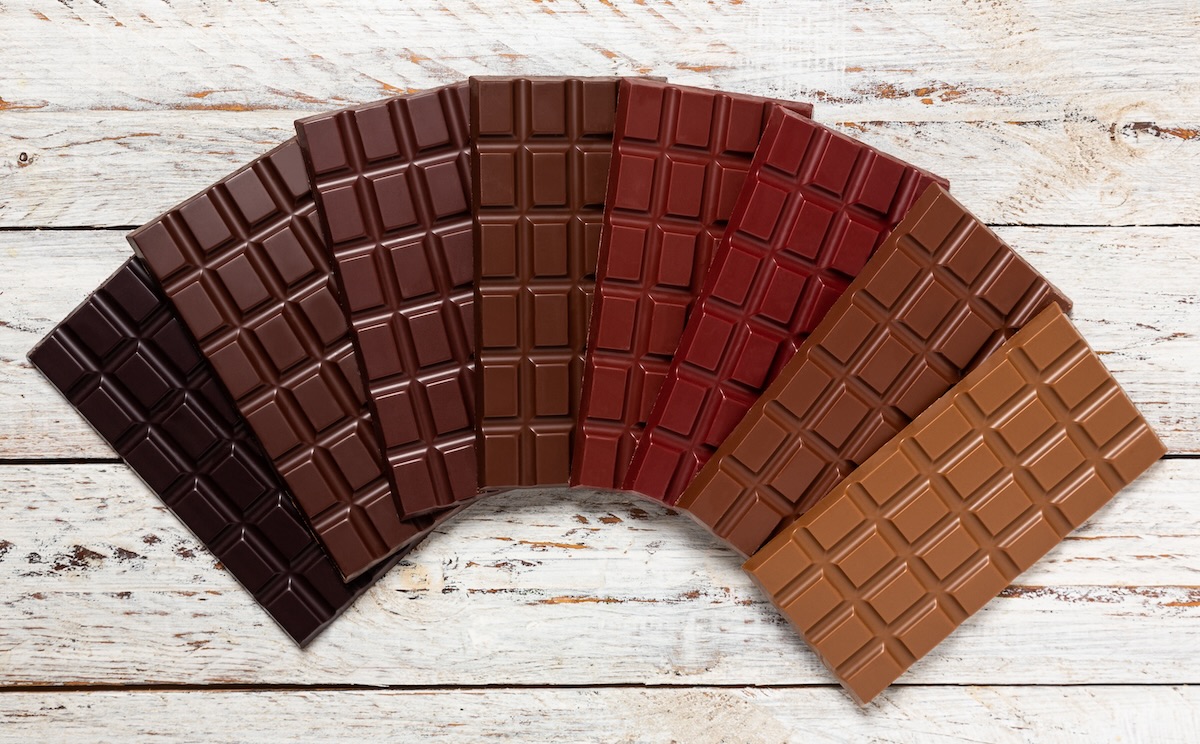
Have you noticed that our raw chocolate bars are all self-coloured? This is largely due to the colour of the freeze-dried berries that we add to the chocolates to give them that healing power of berries and nostalgic flavours.
All berries are added to the chocolates in freeze-dried form. Why freeze-dried? And what is freeze drying?
Berries freeze drying is a process in which the berries are first frozen and then the frozen berries are placed in a vacuum chamber where the water is removed under low pressure and temperature. This evaporates the water directly from the berries in the form of ice, preserving the berries’ shape, flavour and beneficial compounds for the body.
Advantages of freeze drying:
- Stable nutrients: Freeze-drying takes place at a low temperature, which helps preserve the nutrients in the berries, including vitamins, minerals and antioxidants. This differentiates freeze-dried berries from other dried berries, which can lose some of their nutritional value and beneficial substances during heat treatment.
- Shelf life: Freeze-drying removes water from the berries, which is a breeding ground for bacteria and micro-organisms. As a result, freeze-dried berries have a longer shelf life than fresh berries and retain their quality and flavour for longer.
Health benefits of freeze-dried berries:
We add wild blueberries, raspberries, strawberries and blackcurrants to NAMM chocolates in freeze-dried form to maximise their natural power.
77g of chocolate contains nearly 90g of berries!
Wild blueberries
They can be considered a domestic superfruit, as they are rich in vitamins K, C and A, as well as minerals such as copper, manganese, potassium, selenium, zinc, etc. Wild blueberries also stand out for their effective antioxidant properties.
What exactly do these vitamins and minerals support in our bodies?
Vitamin K is needed for blood clotting, and Vitamin A for the development of many cells and tissues in the body. Vitamin A also plays an important role in the visual process. Zinc helps vitamin A to be absorbed and thereby create the pigment melanin, which protects the eye from ultraviolet radiation. Zinc and selenium protect the retina of the eye. Vitamin C maintains the blood vessels in the eyes, ensuring their elasticity and preventing cataract formation. In folk medicine, blueberries are considered a supporter of sharp vision, as studies have confirmed. Blueberries and their compounds protect against glaucoma and cataracts and are good for the veins (1).
Antioxidant richness: Wild bilberries are exceptionally rich in antioxidants, especially flavonoids, including anthocyanins. These antioxidants help fight free radicals and protect the body’s cells from oxidative stress. Studies have shown that the antioxidant content of wild blackberries is associated with their ability to reduce inflammatory processes (2).
Supporting heart health: Forest mushrooms can help improve heart health in several ways. Their richness in antioxidants and flavonoids can help lower inflammation and reduce oxidative stress, which in turn can help reduce the risk of cardiovascular disease. In addition, some studies have shown that regular consumption of wild blackberries can help lower blood pressure and improve vascular health (3, 4).
Protective effects on the nervous system: Wild mushrooms can help protect against the effects of ageing on the nervous system. Their antioxidants and flavonoids help reduce the risk of neurodegenerative diseases and improve memory and cognitive function. Studies have shown that regular consumption of wild bilberries can help improve memory and brain function and reduce the risk of Alzheimer’s disease (5, 6).
Blackcurrants
Immune system booster – Blackcurrant has many positive properties, most notably as an immune system booster. The amount of vitamin C in blackcurrants makes them a superfood, which is 3 times higher than in oranges, for example. Vitamin C improves the body’s resistance to disease. Vitamin C is also needed to ward off spring fever and stress.
Support concentration and brain activity – Thanks to the very high content of antioxidants in the berries, blackcurrants slow down the ageing process and promote concentration and brain function. It also helps fight age-related degenerative diseases (1).
Normal metabolism copper, calcium, phosphorus, manganese, magnesium and potassium in blackcurrants. The vitamin A in the berry is good for mucous membranes, skin and eyes. Blackcurrants are rich in the plant pigments flavonoids, which have a major impact on cardiovascular health, as do the blueberries mentioned above.
Raspberries
“Raspberries are ideally rich in fibre, flavonoids and ellagic acid for the nutritional needs of the human body. The flavonoids and other phytonutrients they contain are powerful antioxidants. Raspberries are rich in manganese, vitamin C, folates, potassium, sodium, vitamin E and iron’. (1)
Antioxidant content: Raspberries are rich in antioxidants, including vitamin C, flavonoids and ellagic acid. These antioxidants help fight free radicals and protect the body’s cells from oxidative stress, just like the blueberries described above. Studies have shown that raspberry antioxidants can help reduce inflammation and protect cells from the effects of aging (2, 7).
Supporting heart health: Raspberries can help improve heart health in several ways. Their antioxidants and flavonoids can help lower cholesterol levels, improve vascular health and reduce the risk of cardiovascular disease. Studies have shown that raspberry consumption can help lower cardiovascular disease risk factors such as high blood pressure and inflammatory markers (7,8).
Supporting weight loss: The compounds found in raspberries can help with weight loss and weight control. Studies have shown that raspberry consumption helps to increase fat breakdown and reduce weight, especially when consumed as part of a balanced diet and healthy lifestyle (2, 7).
References:
- Soots The health benefits of food. Basics of a healthy and balanced diet. Part 2. Health School 2019.
- Basu, Arpita, and Timothy J. Strawbridge. “Anti-inflammatory effects of flavonoids in neurodegenerative disorders.” European Journal of Pharmacology 930 (2021): 129-139.
- Lee, Young-In, et al. “Dietary anthocyanins against obesity and inflammation.” Nutrients 11.9 (2019): 1-19.
- Bowtell, Joanna L., et al. “Montmorency cherry supplementation improves 24-hr recovery following intermittent exercise.” Nutrients 8.10 (2016): 1-12.
- Khodaei, Negar, et al. “Blackcurrant (Ribes nigrum) anthocyanins: A review on the microencapsulation, purification, extraction, and health benefits.” Trends in Food Science & Technology 114 (2021): 387-397.
- Krikorian, Robert, et al. “Blueberry supplementation improves memory in older adults.” Journal of agricultural and food chemistry 58.7 (2010): 3996-4000.
- Huang, Wen-Ching, et al. “Ellagic acid, the active compound of Phyllanthus urinaria, exerts in vivo anti-angiogenic effect and inhibits MMP-2 activity.” Evidence-Based Complementary and Alternative Medicine 2011 (2011).
- Nema, Neelesh K., et al. “The effect of raspberry ketone on gastric emptying: a randomized controlled trial.” Journal of ethnopharmacology 310 (2020): 113525.